BLOG
Biopremix's Extreme Makeover


Lupa Team
The challenge
Every technical breakthrough deserves a story that matches its ambition. That was the challenge our client Biopremix brought to Lupa: strong science, a real product, and a presentation that didn't yet reflect either. As a presentation design agency working with technical and scientific B2B clients across Brazil, Europe and theUS, this is precisely the gap we aim to close: the space between what a company knows and what its audience needs to feel, understand and retain.
Great Science, No Core Message
Biopremix is a natural postbiotic additive that improves fiber digestion and supports rumen health in cattle. The science was solid. But the deck the client had built in-house was designed around everything the team knew about the product, not around what the audience (producers, veterinarians and regulators) needed to walkaway with.The result was a presentation that was information-heavy but message-light: dense slides, long bullet points, and no clear narrative thread. It's a pattern we see often across all industries, and exactly why B2B teams look for a storytelling design agency partner rather than trying to design decks internally. Content and design are inseparable: a slide can be technically accurate and still fail to persuade if it isn't built around a single, memorable idea.
Reframing the story
We approached Biopremix's existing material the way we approach every project: not as a design refresh, but asa full narrative rebuild, following Lupa's four-stage methodology.
01. Discovery
Every project starts here. In Discovery, we ask the questions that shape everything that follows: What's it like to be in your audience's shoes? What is their biggest pain point, and how can they see a better outcome through your solution or service? What is the one core message you want your audience to walk away with?For Biopremix, this meant going through the client's existing deck slide by slide, with extremely dense and unattractive content, everything anchored in boring bullet points. We brainstormed what the story could become instead. This is where Discovery does its real work, and where the difference between a simple slide makeover and true storyboard and narrative design services becomes clear.
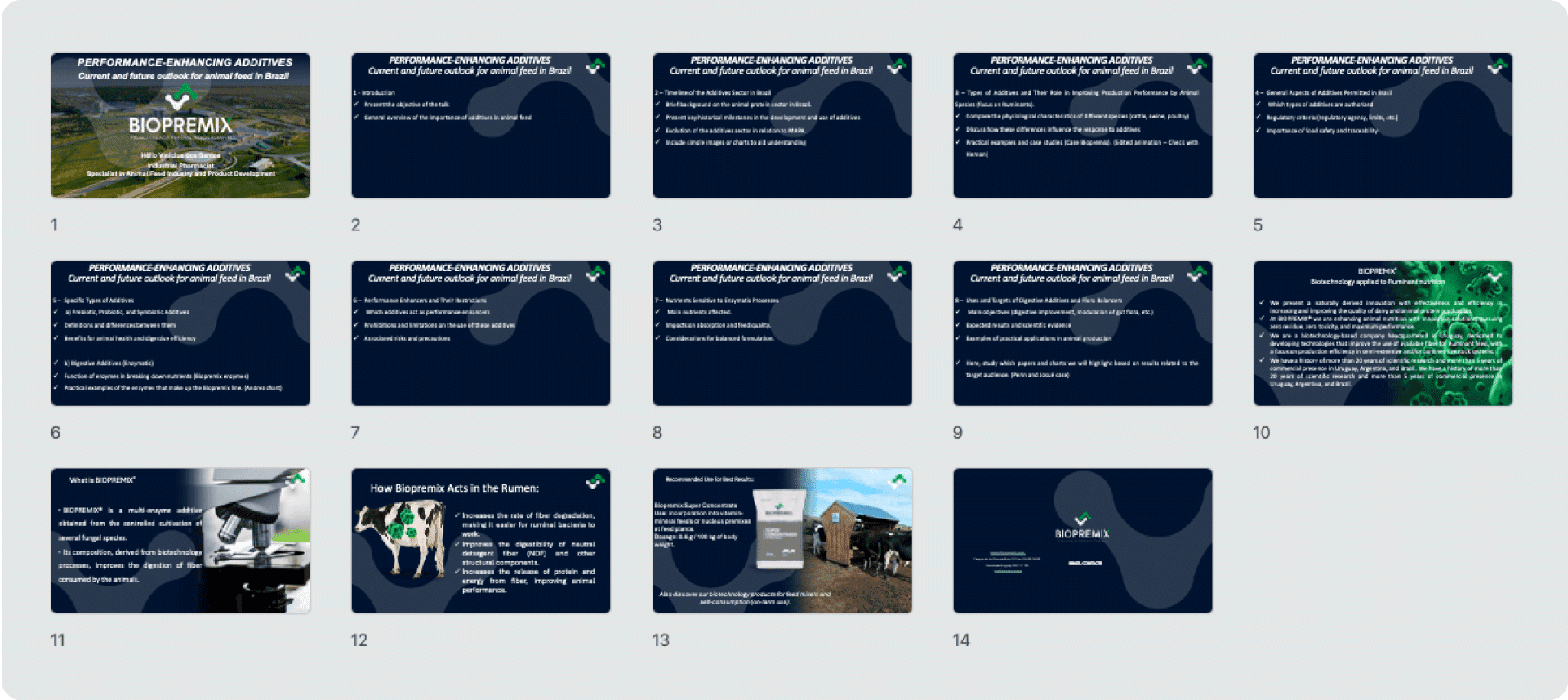
The starting point: the client's original deck
02. Storyboard
Once we understood the audience and the message, we moved to Storyboard. This is when we refine the message and build the raw content:arranging information and slides in the right order and setting the final visual directions that will guide the design phase. By the end of Storyboard, the core message is locked, and every slide has a clear job to do in service of what the audience needs to retain.
03. Visual Identity
With the Storyboard approved, we put together a document we call the Visual Identity, which is essentially how we translate the client's brand elements into clear design guidelines for the specific assets we will design. Based on existing brand elements (logo, colors, graphic components, and so on) and the context of the presentation (sales, product launch, fundraising, internal meeting), we build a tailor-made Visual Identity that steers every slide with a focus on aesthetics and information clarity.
One thing worth knowing: the Visual Identity is created only once. Future presentations that follow the same visual language skip this stage entirely, which means lower cost and faster turnaround than the first project.
04. Design
And that's when the magic happens. Once the Visual Identity is approved, we proceed with the actual asset design, refining both visuals and copy based on the client's feedback. We make each slide count, weaving the story together in the most compelling way.


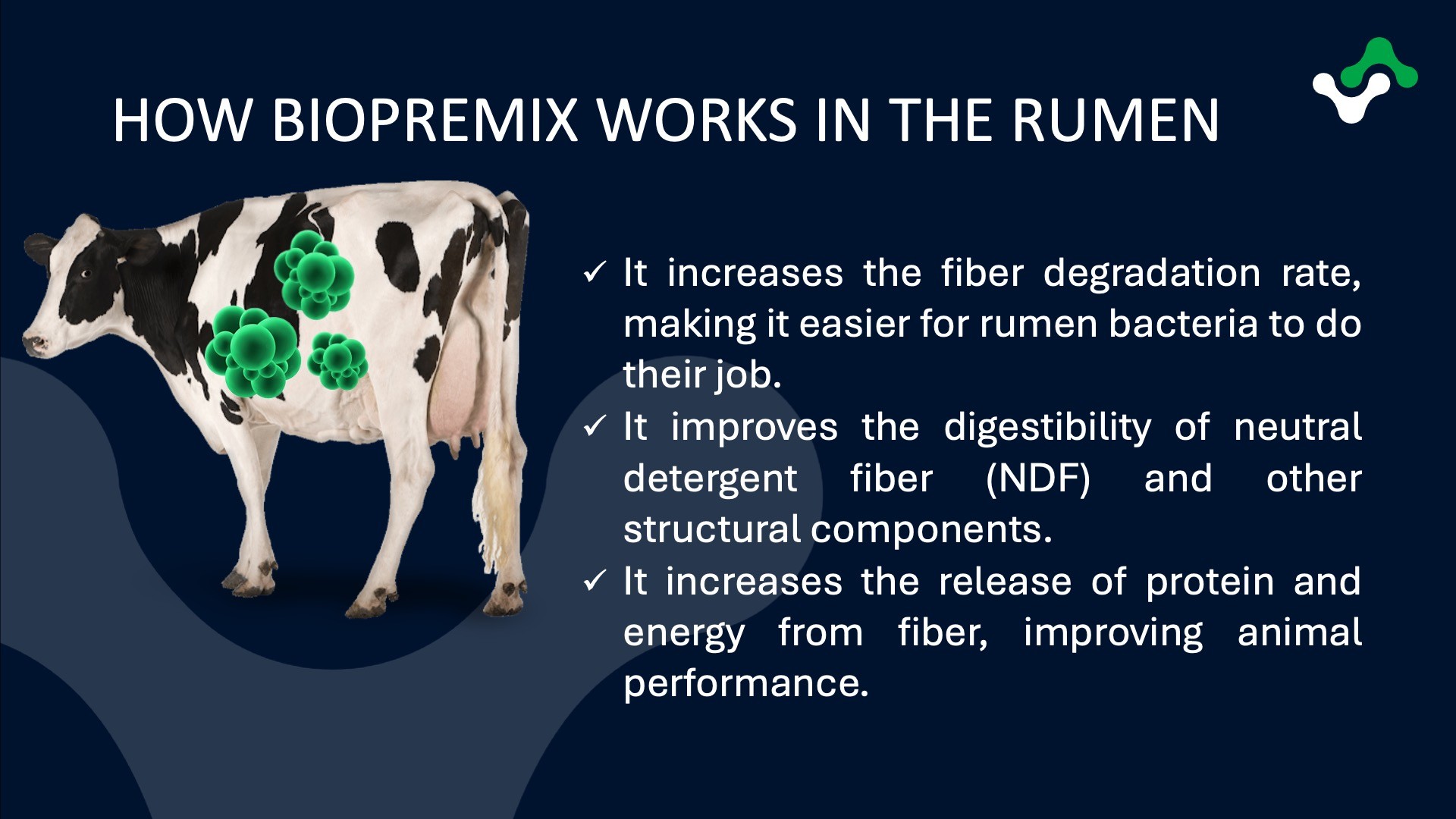
The Outcome
The final result generated greater engagement and helped secure new contracts. Biopremix came to us with a firm deadline: a major agribusiness trade show, with producers from across the country and government health regulation representatives in attendance. It was essential that the company's Chief Scientific Officer walk on stage with a presentation worthy of the event. The deck was built to support what became, in effect, a Keynote speech delivered live to that audience.
The deck didn't stop working after the trade show. It went on to be used in online meetings with other prospects, proving that a well-built sales deck, designed with purpose and the right visual language, keeps paying off long after the first presentation.Some slides still carried more detailed content than others, because the client's specific case called for it. Each presentation is unique and needs to follow best practices adapted to its own context, never a one-size-fits-all template. Most of the slides were left editable, so the client's team could update texts and information independently going forward.
Why This Matters for B2B Teams
Biopremix's case is a familiar one for any technical company selling into complex, regulated, or highly specialized markets. The instinct is to include everything; the catch is knowing what to leave out. That's the value a dedicated B2B visual storytelling partner brings to the table: not just a nicer-looking deck, but a sharper argument.




READ MORE

